
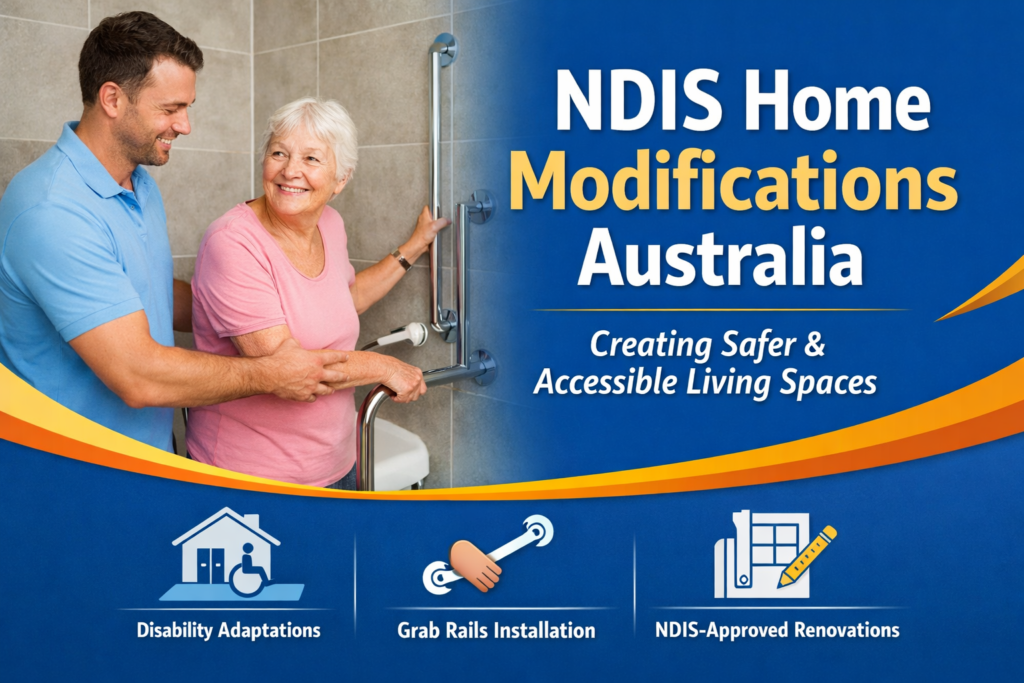
A safe and comfortable home is important for everyone. For people living with disabilities, the home must also support daily movement and independence. Some houses are not built with accessibility in mind. This can make simple activities such as using the bathroom, entering the house, or moving between rooms difficult. This is why NDIS Home Modifications Australia programs are so important.
The National Disability Insurance Scheme (NDIS) helps eligible participants improve their homes through accessibility upgrades. These changes allow individuals to move safely and complete everyday tasks more easily. Some modifications are small and simple, while others involve larger structural work. The main goal is to make the home safer and easier to use.
Across Australia, more families are choosing professional services to modify their homes. These experts understand accessibility design and NDIS guidelines. They ensure that every change improves safety and independence.
What Are NDIS Home Modifications?
Home modifications are physical changes made to a house to improve accessibility. These changes help people with disabilities move safely and perform daily activities without unnecessary risk.
Most home modifications start with a professional assessment. An occupational therapist visits the home and studies how the participant uses different spaces. They identify barriers that make daily life difficult.
After the assessment, a modification plan is created. This plan explains what changes are needed to improve safety and accessibility. Once the plan is approved, trained professionals carry out the work.
Many families rely on Home Modification Services Sydney to manage this process. These services coordinate assessments, planning, and installation to ensure everything meets safety standards.
Why Home Accessibility Is Important
Accessibility has a strong impact on daily life. When people can move around their homes easily, they feel more confident and independent.
Without proper accessibility, simple tasks can become stressful. For example, climbing stairs, entering the shower, or reaching kitchen counters may become difficult. These challenges can also increase the risk of falls or injuries.
Home modifications help remove these obstacles. By adjusting layouts and installing supportive features, participants can use their homes more comfortably.
Accessible homes also reduce the need for constant assistance. This allows individuals to maintain privacy and independence while completing everyday activities.
Common Disability Home Adaptations
Every participant has different needs. For this reason, Disability Home Adaptations Australia services focus on customised solutions.
Some homes need only small adjustments, while others require larger changes. The aim is to create a space that supports safe movement and easy access.
Many homes begin with improved entry access. Ramps are often installed so wheelchair users can enter and exit the house safely. Doorways may also be widened to allow mobility aids to pass through comfortably.
Bathrooms are one of the most common areas for modifications. Accessible showers, non-slip floors, and support rails make bathing safer. These upgrades reduce the risk of slips and falls.
Kitchens can also be redesigned. Lower countertops and accessible cupboards allow participants to cook and prepare meals with greater independence.
When these changes are designed well, they improve functionality without affecting the comfort of the home.
NDIS-Approved Home Modifications in Sydney
Many participants in New South Wales rely on NDIS-Approved Home Modifications Sydney providers. These professionals follow strict guidelines to ensure modifications are safe and effective.
NDIS usually groups modifications into three categories based on complexity.
Simple modifications are low-cost improvements that are quick to install. These may include grab rails, handheld showers, or minor safety fixtures.
Minor modifications involve slightly larger adjustments. These may include installing ramps, widening doorways, or adjusting bathroom fittings.
Complex home modifications involve major structural work. These projects may include redesigning bathrooms, modifying kitchens, or installing lifts.
Each project is carefully assessed to ensure it meets the participant’s needs.
The Importance of Grab Rails Installation
A common and highly effective upgrade is Grab Rails Installation Australia services. Grab rails provide support and balance in areas where stability is needed.
Bathrooms are the most common places for grab rails. They are often installed near toilets, showers, and bathtubs. Hallways and staircases may also include rails for additional support.
For people with limited mobility, these rails make standing, sitting, and moving safer. They also reduce the chance of slips or falls.
Although grab rails are simple to install, they have a major impact on safety. Many participants begin their home modifications with these small improvements.
The Home Modification Process
The modification process begins with a professional assessment. An occupational therapist studies how the participant moves through the home.
They examine areas such as entrances, bathrooms, kitchens, and hallways. Their goal is to identify barriers that affect mobility or safety.
After the assessment, a detailed plan is prepared. This plan explains which modifications will help the participant live more comfortably.
Once the plan receives approval, experienced builders carry out the installation work. These professionals ensure every modification meets safety standards and building regulations.
After the work is completed, the home is reviewed to confirm that the changes are functioning properly.
Benefits of Professional Home Modification Services
Professional providers bring valuable experience to home modification projects. Their knowledge helps ensure that every change improves safety and usability.
One of the biggest benefits is reduced risk of accidents. Accessible layouts and supportive fixtures make movement safer.
Another benefit is greater independence. When homes are designed for accessibility, participants can perform more tasks without help.
Professional providers also ensure compliance with NDIS requirements and Australian building standards. This helps avoid problems during approval or installation.
In addition, experienced designers know how to integrate modifications into the home without affecting its appearance. This ensures the space remains comfortable and welcoming.
Long-Term Benefits of Accessible Homes
Home modifications offer long-term advantages. A well-designed home can support participants for many years.
Accessible spaces allow people to remain in their homes longer. This reduces the need to move to assisted living facilities.
These changes also benefit caregivers. When the home is easier to navigate, caregivers can provide support more safely and efficiently.
Accessible homes also reduce the likelihood of injuries. Fewer accidents mean fewer hospital visits and improved overall well-being.
For many families, home modifications provide peace of mind. They know their loved ones can live safely and comfortably.
Creating Homes That Support Independence
Accessibility is about more than construction. It is about creating a living environment that supports dignity, safety, and independence.
Simple changes such as ramps, wider doorways, and safer bathrooms can transform everyday life. These improvements remove barriers and make daily routines easier.
As awareness grows, more Australians are choosing to improve their homes through accessibility upgrades. With the help of professional providers, participants can create homes that truly meet their needs.
By working with experienced specialists in NDIS Home Modifications Australia, individuals can build safer homes that support independence and comfort for years to come.