
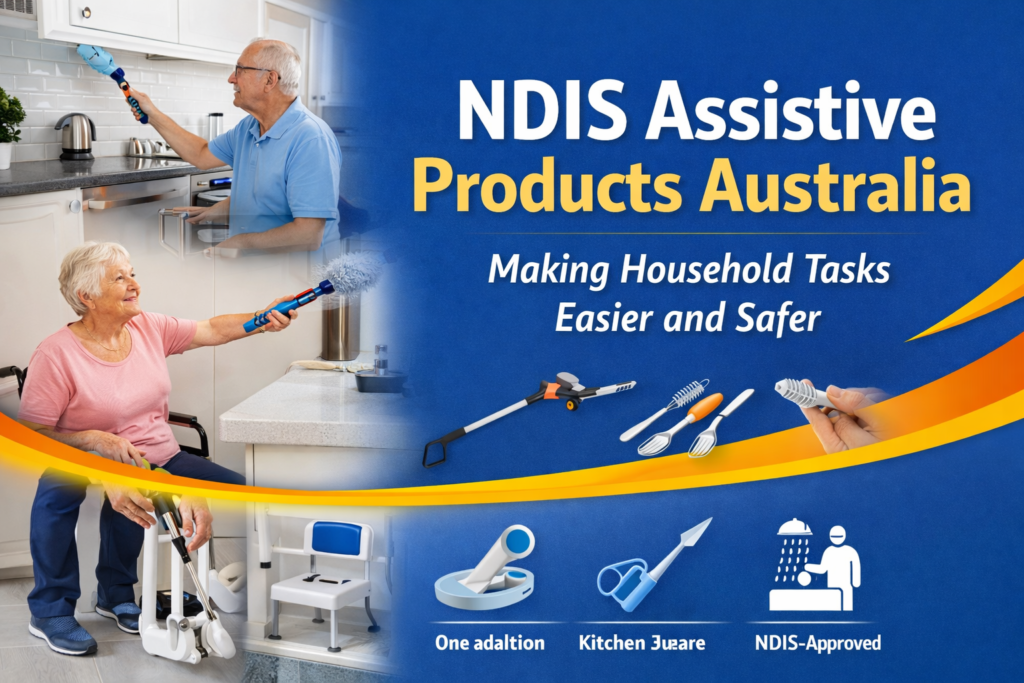
Daily household tasks such as cooking, cleaning, laundry, and personal care are essential parts of everyday life. For people living with disabilities, however, these activities can sometimes be difficult without the right support. This is where NDIS Assistive Products Australia services play an important role in helping participants live more comfortably and independently.
The National Disability Insurance Scheme (NDIS) provides funding for assistive products and technologies that support individuals with disabilities in their daily lives. These tools are designed to make routine tasks easier while improving safety, independence, and overall well-being. Assistive products can include mobility aids, adaptive kitchen tools, bathroom safety equipment, and many other devices that help people manage household activities with confidence.
With the right assistive solutions, participants can perform daily household tasks with less effort and greater independence.
Understanding Assistive Products for Daily Living
Assistive products are specialised devices or tools designed to support people with disabilities in completing everyday activities. These products reduce physical strain and improve safety while performing tasks at home.
Under the NDIS, assistive products are generally funded through the Core Support category called “Assistance with Daily Living.” These supports help participants manage routine activities such as personal care, household cleaning, cooking, and mobility within the home.
Assistive technology can range from simple devices to more advanced equipment. For example, a participant may use easy-grip utensils for cooking or install safety rails in the bathroom. In more complex cases, mobility aids or electronic devices may be used to support communication or movement.
These products are selected based on each participant’s individual needs. The aim is always to help people perform everyday tasks more independently while improving safety and comfort.
Why Assistive Products Are Important for Household Tasks
Household tasks are essential for maintaining a safe and comfortable home environment. However, individuals with mobility limitations or physical challenges may find these tasks difficult without assistance.
Assistive devices help reduce these barriers by making tasks simpler and more manageable. For example, lightweight cleaning equipment or adaptive kitchen tools can help participants cook and clean without excessive strain.
These solutions also improve safety. Bathrooms, kitchens, and other areas of the home can pose risks if the environment is not adapted properly. Assistive products reduce these risks by providing support and stability during everyday activities.
Many participants rely on Household Task Assistance Sydney services to combine assistive products with professional support workers. This combination helps individuals complete daily tasks while developing skills that promote long-term independence.
Common Disability Products for Daily Living
A wide range of assistive tools is available to support individuals with household tasks. Disability Products for Daily Living Australia services focus on providing the right equipment for each person’s needs.
Kitchen aids are among the most common assistive products. These include easy-grip utensils, adaptive cutting boards, jar openers, and lightweight cookware. These tools help participants prepare meals safely and comfortably.
Cleaning devices are another important category. Long-handled dusters, lightweight vacuum cleaners, and ergonomic mops allow people to clean their homes without bending or reaching too much.
Bathroom safety products are also widely used. These include shower chairs, raised toilet seats, and non-slip mats that help prevent falls and injuries.
Mobility aids such as walkers and wheelchairs also play a key role in supporting household tasks. These devices help participants move safely around their homes while completing daily activities.
When used together, these assistive products create a home environment that is safer and easier to manage.
Assistive Devices for Household Tasks in Sydney
Participants in New South Wales often access Assistive Devices for Household Tasks Sydney services to improve accessibility within their homes.
These services help individuals choose the right devices for their needs. Professional providers work closely with occupational therapists and support workers to recommend suitable products.
For example, adapted kitchen tools may be recommended for individuals with limited grip strength. Cleaning aids may be suggested for people with mobility challenges. Bathroom safety devices may be installed to reduce fall risks.
Assistive technology also includes smart devices that simplify daily tasks. Voice-controlled lighting, automated door openers, and programmable reminders help participants manage their routines more easily.
These solutions are designed to improve independence while making everyday activities less stressful.
Personal Care Assistive Products for Everyday Comfort
Personal care is another important part of daily living. Many participants rely on Personal Care Assistive Products Australia to manage hygiene and grooming tasks safely.
Bathroom safety equipment is one of the most common types of personal care assistive technology. Shower chairs, bath lifts, and grab rails provide support while bathing.
Dressing aids such as button hooks and zipper pullers help participants dress independently. These small tools can make a big difference for people with limited hand mobility.
There are also products designed to support grooming activities. Easy-grip toothbrushes, electric razors, and adapted combs allow individuals to maintain personal hygiene without assistance.
Pressure mattresses and supportive cushions are another example of assistive technology used for comfort and health management. These devices help prevent pressure injuries for individuals who spend extended periods sitting or lying down.
These products support both independence and dignity by allowing participants to manage personal care routines with confidence.
How NDIS Household Task Support Works
In many cases, assistive products are combined with professional support services. NDIS Household Task Support Sydney services provide trained support workers who assist participants with daily home activities.
Support workers may help with tasks such as cleaning, laundry, meal preparation, and general home maintenance. These services ensure that participants live in a clean and safe environment.
At the same time, support workers also encourage participants to develop new skills. By using assistive devices and learning new techniques, individuals can gradually perform more tasks independently.
The goal of household support is not just to complete tasks for the participant but to empower them to manage daily activities with greater confidence.
The Process of Accessing Assistive Products
Accessing assistive products through the NDIS usually begins with an assessment. An occupational therapist or healthcare professional evaluates the participant’s needs and daily challenges.
Based on this assessment, they recommend assistive devices that will improve safety and independence. These recommendations are then included in the participant’s NDIS plan.
Once approved, participants can work with providers to obtain the recommended products. Some providers also offer training to help participants learn how to use the devices safely.
Regular reviews ensure that assistive products continue to meet the participant’s needs. As circumstances change, additional devices or adjustments may be recommended.
Benefits of Assistive Products for Household Tasks
Assistive technology offers many advantages for people living with disabilities. One of the most important benefits is increased independence. With the right tools, participants can complete many tasks without relying on constant assistance.
Safety is another key benefit. Many household accidents occur due to slips, falls, or physical strain. Assistive devices reduce these risks by providing stability and support.
Assistive products also improve confidence and quality of life. When individuals can manage their homes independently, they feel more in control of their daily routines.
These technologies also benefit caregivers. When tasks become easier and safer, caregivers can provide support more effectively and with less physical effort.
In the long term, assistive products help participants remain in their homes and maintain their preferred lifestyle.
Choosing the Right Assistive Product Provider
Selecting the right provider is important when accessing assistive products. Experienced providers understand the needs of NDIS participants and offer personalised support.
A good provider will work closely with therapists, support coordinators, and families to recommend suitable products. They will also ensure that all devices meet safety standards and are easy to use.
Professional providers also offer guidance on maintaining and upgrading assistive devices when needed. This ensures that participants continue to receive the best support possible.
Participants should always choose providers who focus on quality, reliability, and personalised care.
Supporting Independence Through Assistive Technology
Assistive products have transformed the way people with disabilities manage their daily lives. From kitchen tools and cleaning aids to mobility equipment and personal care devices, these technologies remove many of the barriers that individuals face at home.
With the right combination of devices and professional support, participants can live more comfortably and confidently in their own homes.
By accessing reliable NDIS Household Task Support Sydney, individuals can combine assistive products with expert guidance, ensuring that everyday household tasks remain manageable, safe, and empowering.